By Sri Gangadhareshwara Seva Trust · Published March 2025 · Updated June 2026
Quick answer
Maha Shivaratri 2026 falls on Sunday, 15 February 2026. At Kailasagiri Cave Temple it is the year's most important festival, marked by an all-night vigil, special abhishekam to the four-faced Shiva Linga, continuous chanting, and thousands of lamps. Entry is free; arrive early, dress modestly, and plan for large crowds.
When is Maha Shivaratri 2026?
Maha Shivaratri 2026 falls on Sunday, 15 February 2026. Often called the Great Night of Shiva, it is the most sacred night in the Shaiva calendar and, fittingly, the most important festival of the year at this Shiva temple. Devotees observe it through fasting, prayer, and a vigil kept through the night.
Because the festival falls on a weekend in 2026, very large crowds are expected. Kailasagiri is dedicated to Lord Shiva and is built around the magnificent Chaturmukha Lingeshwara Swamy, the four-faced Shiva Linga, which makes Shivaratri an especially powerful occasion here.
What happens on Maha Shivaratri at Kailasagiri?
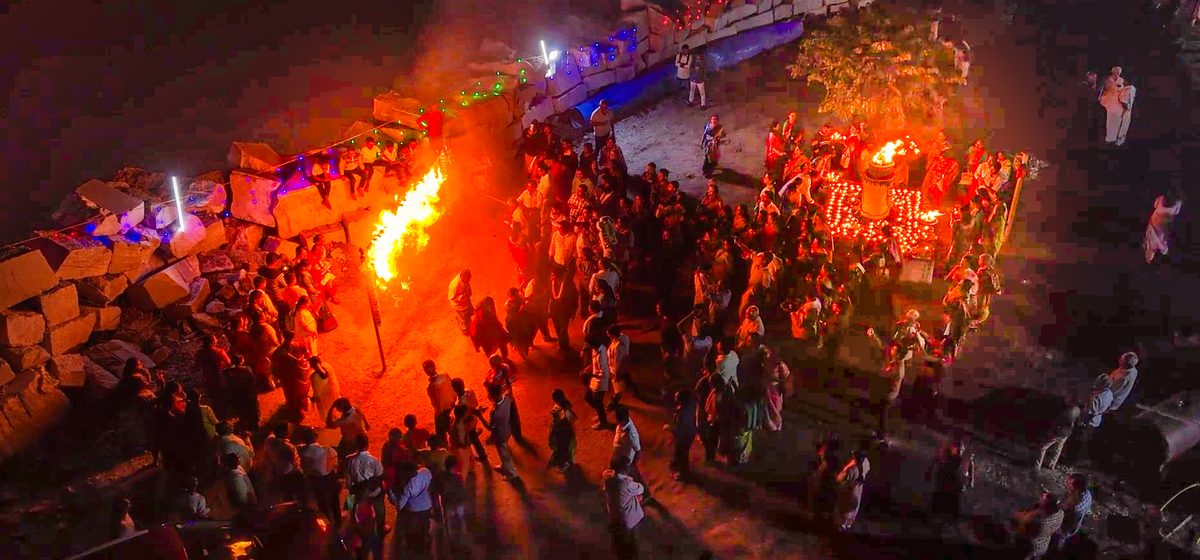
The defining observance is the all-night vigil (jagarana). Tradition holds that staying awake through the night in remembrance of Shiva, while the world sleeps, brings great spiritual merit. Inside the cool, lamp-lit caves, the night passes in waves of chanting, bhajans, and prayer.
A central rite is the abhishekam — the ceremonial bathing of the Shiva Linga with offerings such as water, milk, honey, and sacred ash, accompanied by Vedic chanting. As darkness falls, thousands of lamps are lit throughout the complex, turning the carved stone shrines into a sea of golden flame. Through it all, the temple's daily Anna Danam free-meal service continues, feeding the many pilgrims who come.
For the schedule of this and other celebrations, see the festivals and events page.
How do you plan a visit for Shivaratri?
Kailasagiri Cave Temple is at Kavalaganahalli, in the Ambajidurga Hill Range, Chintamani Taluk, Chikkaballapura District, Karnataka 563125 — about 80 km from Bangalore. Most visitors drive or take a bus toward Chintamani; detailed directions are on the how to reach page.
A few practical tips for festival day. Arrive early — the temple is busiest in the evening and overnight, so a daytime or early arrival means an easier darshan. Entry is free and regular darshan runs 7:00 AM to 7:00 PM, with extended hours through the Shivaratri night. Dress modestly as befits a place of worship, carry water, and be prepared to walk and stand for some time.
For a smooth trip, review plan your visit and darshan timings before you set out. To confirm festival arrangements, you can call the temple at +91 88849 23104.
Why visit Kailasagiri for Maha Shivaratri?
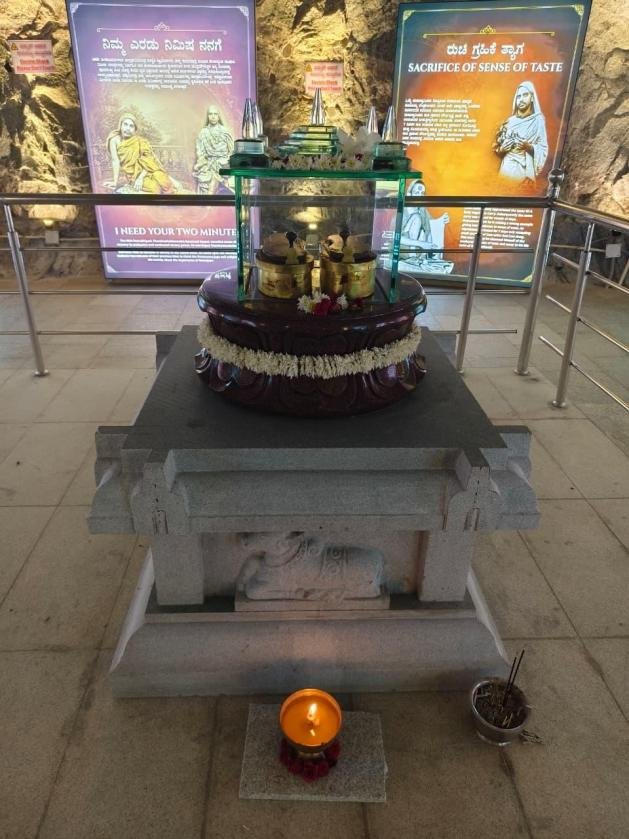
There are many Shiva temples in Karnataka, but few offer the experience of keeping vigil inside a hand-carved cave complex of more than 20,000 square feet — the largest man-made cave temple built anywhere in the world in the last 1,000 years. To worship the four-faced Lingeshwara through the night, surrounded by thousands of flickering lamps and the sound of unbroken chanting, is to feel the festival in a way that stays with you. Learn more on the about the temple page.
Frequently asked questions
When is Maha Shivaratri 2026 at Kailasagiri Cave Temple?
Maha Shivaratri 2026 falls on Sunday, 15 February 2026. At Kailasagiri Cave Temple it is the most important festival of the year, observed with an all-night vigil, special abhishekam, and the lighting of thousands of lamps.
What happens on Maha Shivaratri at Kailasagiri?
Devotees keep an all-night vigil (jagarana) in honour of Lord Shiva. The day includes special abhishekam to the Chaturmukha Lingeshwara Linga, continuous chanting and bhajans, the lighting of thousands of lamps, and the daily Anna Danam free meal for all visitors.
How do I reach Kailasagiri Cave Temple for Shivaratri?
Kailasagiri Cave Temple is at Kavalaganahalli, near Chintamani in Chikkaballapura District, Karnataka, about 80 km from Bangalore. Most visitors drive or take a bus toward Chintamani. Plan to arrive early on festival day, as crowds are large.